What happens to the money you didn't budget for the sewer line, the one your inspector never actually looked at?
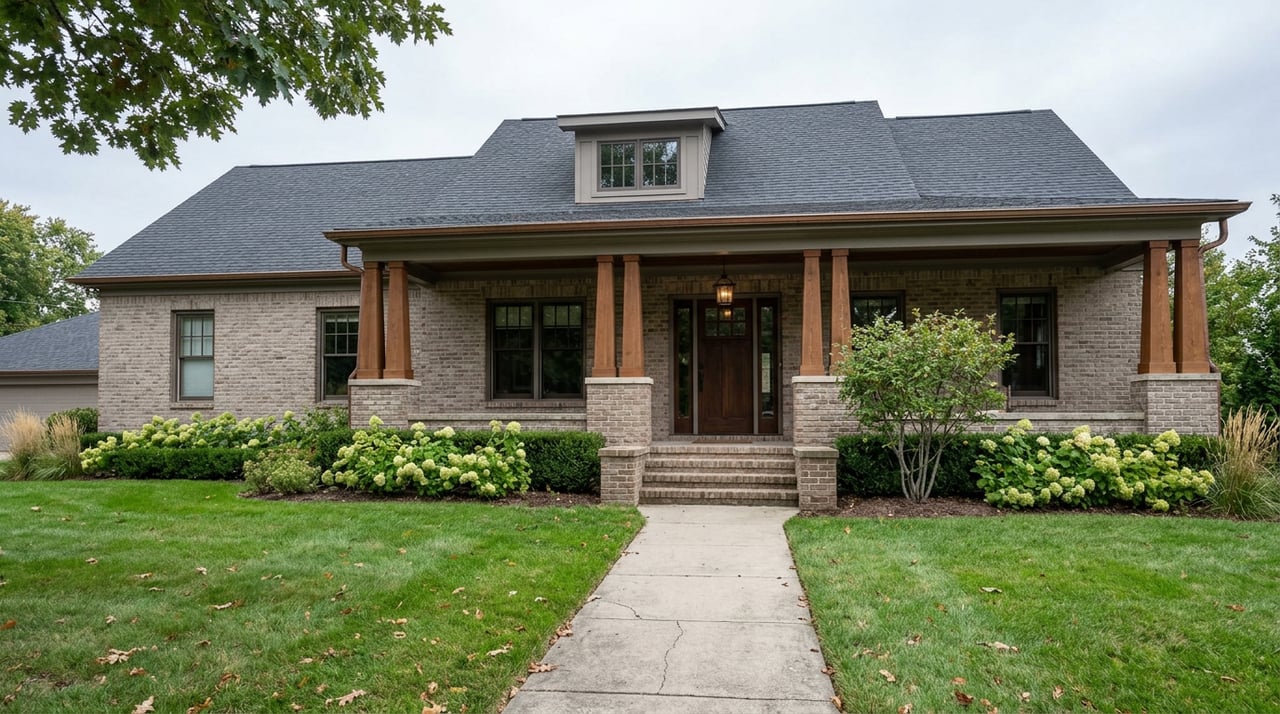
That's the question worth asking before you write an offer on one of Royal Oak's brick bungalows, the kind built between the 1920s and the 1950s that make up so much of the city's housing stock in Vinsetta Park, Northwood, Oakridge, and the blocks off the Woodward corridor. A standard home inspection walks the roof, the furnace, the electrical panel, the foundation. It rarely runs a camera down the one pipe that carries every drop of wastewater out of the house, because that's a separate service most buyers never think to request. In a city where the housing stock is old enough to have outlived its original plumbing twice over, that gap matters more than it does almost anywhere else in the Detroit suburbs.
What A Standard Inspection Actually Covers
Home inspectors are trained to look at what they can see and reach. They'll check the water heater, run the faucets, flush the toilets, and note if drainage seems slow. What they typically will not do, unless you specifically pay for it as an add-on, is send a video camera down the sewer lateral, the underground pipe that runs from the house to the city's main line in the street.
That distinction is easy to miss in a purchase agreement timeline that already feels crowded with deadlines. But for a house built in 1935 with its original clay lateral still in the ground, it's the difference between finding a manageable problem before closing and discovering an expensive one the first time three toilets back up at once.
The Pipe You Own Even Though You Never See It
Here's the part that catches people off guard: in Royal Oak, the homeowner owns and maintains the sewer lateral from the house all the way to the city's connection point. The city maintains the main line running under the street, and its Sewer Division is responsible for roughly 300 miles of sanitary and storm sewer across the community. But the private stretch, the part running under your own yard, is entirely on you.
Most of Royal Oak's older neighborhoods were built when clay pipe and cast iron were standard. Those materials were never designed to last forever, and nearly a century of tree roots looking for moisture has had a long time to find the joints. The city's mature oak and maple canopy, one of the things that makes these blocks so pleasant to walk, is also part of what makes root intrusion into old clay laterals a recurring pattern for local plumbers.
There's a second wrinkle specific to how some of these subdivisions were platted. In neighborhoods like Normandy, Northwood, and pockets along the Woodward corridor, the sewer lateral doesn't run under the front yard toward the street. It runs through the back of the lot instead, a configuration plumbers call a rear-yard sewer. The city's own guidance confirms these exist throughout Royal Oak, sitting within recorded easements, and that homeowners get advance notice before any city crew needs backyard access for maintenance on the public portion.
If your lateral runs through the backyard instead of under the street, that single fact changes the entire math on a repair: access, disruption to fencing or landscaping, and often the price of the job itself.
That's not a detail you'll find on a listing sheet. It's a detail you find by asking, or by pulling the lateral's path before you're three weeks into a signed contract.
The Insurance Gap Almost Nobody Checks
The other assumption worth correcting before closing: most standard homeowner's insurance policies do not cover sewer line failure caused by age, gradual deterioration, or tree root intrusion. Coverage generally applies only when the damage comes from a sudden, covered event, not from decades of a clay joint slowly giving way. That means the repair bill for an aging lateral in a 1940s bungalow typically lands squarely on the owner, not the insurance company, whether that owner is the seller today or the buyer six months from now.
This is precisely why a pre-offer or pre-listing camera inspection earns its cost. It converts an unknown into a known, while there's still room to negotiate.
What A Look Underground Actually Costs Right Now
Local plumbing contractors publishing 2026 pricing for Oakland County residential sewer work land in a consistent range, which is useful because it means these numbers aren't outliers:
| Service | Typical 2026 Cost |
|---|---|
| Full camera inspection with condition report | $150 to $400 |
| Trenchless repair (pipe bursting or lining) | $5,500 to $12,000 |
| Traditional excavation and replacement | $4,500 to $10,000 |
| Localized patch repair, single failure point | $2,000 to $5,000 |
A separate Oakland County pricing guide breaks the same work down per linear foot, putting trenchless methods around $60 to $300 per foot and traditional excavation around $55 to $200 per foot depending on depth and access. Two independent sources landing in the same neighborhood gives you a real number to work with rather than a guess.
Set next to those figures, a $150 to $400 camera inspection looks like exactly what it is: cheap information about a five-figure risk. It's the kind of expense that feels optional right up until it isn't.
Reading That Cost Against The Purchase Price
Royal Oak's housing market gives some helpful context here. Across the trailing six months ending in August 2026, tracked closings put the median sold price in the city at $365,500, with the middle half of sales closing between $285,000 and $466,000. A worst-case trenchless repair at $12,000 works out to roughly three percent of a median-priced purchase. That's not enough to derail a deal on its own, but it's more than enough to be worth negotiating as a credit or a price adjustment rather than absorbing as a surprise the week after you move in.
For a seller, the calculation runs the other direction. A camera inspection done before listing means you're the one controlling the narrative on a hundred-year-old pipe, not reacting to a buyer's inspector finding root intrusion during their contingency period.
Before You Write The Offer
A few questions worth asking, whichever side of the transaction you're on:
- Has the sewer lateral ever been scoped, and if so, when, and do you have the report
- Does the lot's lateral run under the front yard toward the street, or through the back, particularly in Normandy, Northwood, or the Woodward corridor blocks
- Is the original pipe material clay, cast iron, or has it already been updated to PVC
- If any excavation has happened on the property before, was a MISS DIG 811 utility locate completed, since Michigan law requires that call at least three business days ahead of digging
- Would the seller consider a camera inspection as part of the inspection period, splitting the cost, or building the finding into the negotiation
None of these questions are adversarial. They're the same questions a careful buyer asks about a roof or a furnace, applied to a system that happens to be buried and invisible.
A Few Quick Answers
Does the city ever pay for lateral repairs? No. The city's Sewer Division maintains the main line in the street and roughly 300 miles of public sewer infrastructure, but the private lateral connecting a house to that main is the homeowner's responsibility, from the foundation to the connection point.
How do I know if my lateral is clay, cast iron, or already replaced? A camera inspection is the only reliable way to confirm material and condition. Given that most of Royal Oak's bungalow stock dates to the 1920s through 1950s, assuming original material until proven otherwise is the safer starting point.
Can this be built into a purchase agreement? Yes. A sewer scope can be added as a contingency item alongside a general home inspection, and any findings can be negotiated the same way roof or furnace issues typically are, through a credit, a repair request, or a price adjustment.
The Nelson Team's Take
Royal Oak's bungalows carry a hundred years of character, and part of loving that character is knowing what's still original underneath it. Debbie and Ryan Nelson have walked enough of these blocks, from Vinsetta Park to Northwood to the streets edging downtown, to know that the best negotiations happen when the facts are on the table early, not discovered after the moving truck leaves.
If you're weighing a purchase in one of Royal Oak's older neighborhoods, or getting ready to list a home that's been in the family for decades, The Nelson Team can walk you through what to ask, what to request, and what a fair negotiation looks like when a century-old pipe is part of the conversation. Get Your Home Valuation and let's talk through the specifics of your street, your subdivision, and what's likely still running underneath it.